It’s Guest Blog Wednesday featuring Frank Doorhof!
Take control
One of the things I encounter a lot during talks with attendees to my workshops or seminars is that a lot of photographers struggle with their light. Now I don’t want to generalize, but I think for a lot of shooters out there this is a reoccurring problem.
One could almost say, “Most photographers are controlled by their lighting, while a photographer should be in control of their lighting.”
In photography light is our language, so it’s of vital importance to learn to speak that language. I hear you thinking, “But I don’t have expensive gear to fight the sun, or to manipulate light.” And I agree, some images that you see online will be hard to get without a powerful strobe, but don’t worry. That’s not what this blog is about.
Take Photoshop As An Example. When you start Photoshop it all looks incredibly intimidating right?
Where to start?
What to do?
Help…
The same thing happened to me. And some books or videos don’t help either, it just makes it more complicated. For me a lot changed when I learned about Scott. He explained things very easily and gave me the tools I needed to progress. No smoke and mirrors or overcomplicating stuff, just the bare essentials from which you can build and add (ending up with some more complicated actions, but understanding what they do and why you use them).
When we look at lighting, we see the same thing. Often things are explained the “wrong” way or just way too complicated. I always tell my students to remember one thing… Photography is an old art, so this means that in the past people with very primitive gear were able to do it. You should be able to do the same (or even better), but also it’s an art form. Now let’s look at two topics and give you some tips to improve your photography (almost instantaneous).
- Photography Is Light
This shouldn’t come as a surprise. Without light there would not be anything to register (unless you love taking the same black/depressing shot every time). The excuse often heard is that someone doesn’t own brand X or modifier Y, so he/she is limited in what they can do….Let’s be honest. We all used the excuse at least once.
In essence it’s very important to realize that light is everywhere. There is absolutely no light source that should be labeled as “not fit for photography.” For example, take the following shot which was done with one bare light bulb.
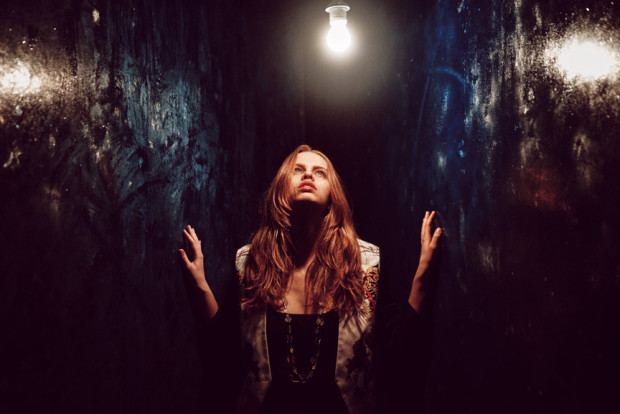

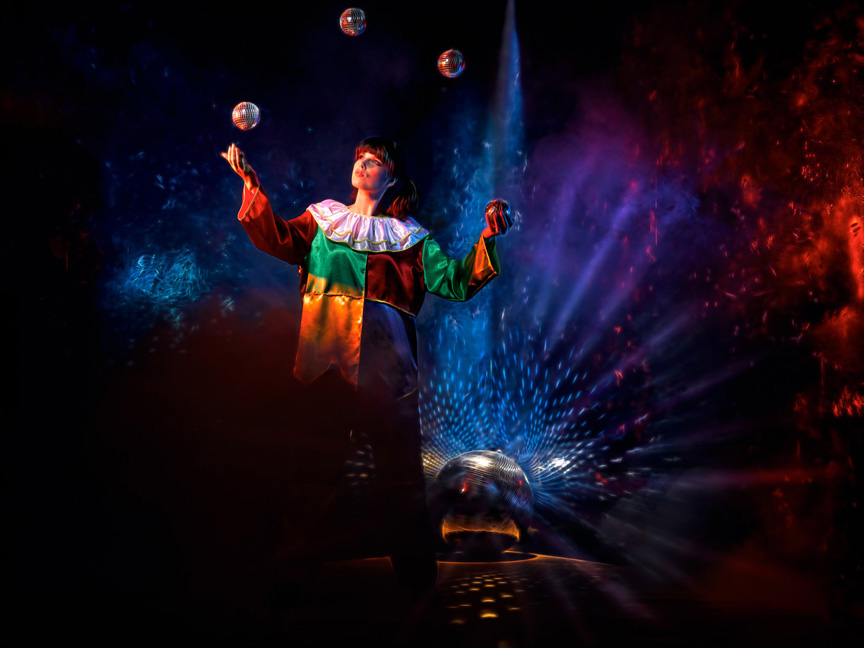
Now up the ante a little bit and use chandeliers you can buy from eBay.
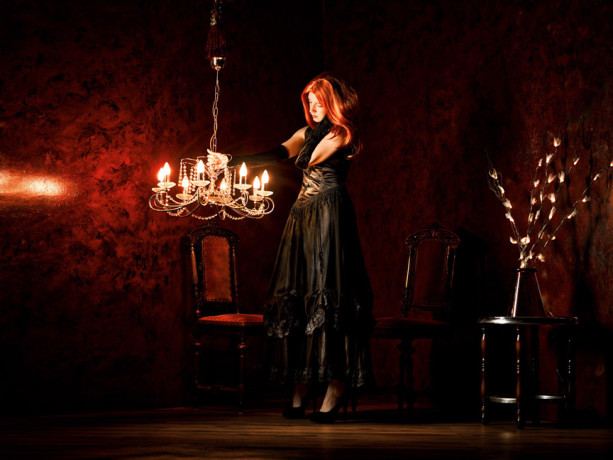
As soon as you master this, what holds you back to add a little bit of strobes and maybe some smoke?

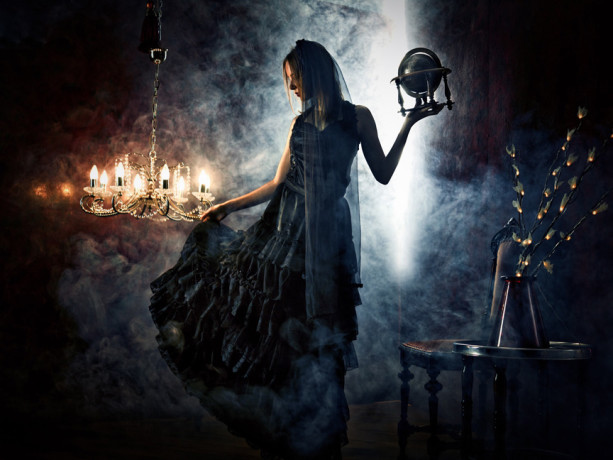
Understanding what light does is the first step in becoming a better photographer. I strongly believe that if one starts out shooting with the most simple light sources, one could progress very quickly. Instead, some people start out with a complete studio kit and a DSLR they hardly know; it’s a recipe for disaster. The best tip I can give someone is to start learning their camera. Know it by heart so you don’t struggle on the set. When you know what all the little knobs do, start shooting with the free light source available to everyone, “Natural light.” Yep, it’s all around us and it’s called the sun. Don’t be afraid of the harsh quality of the sun during midday, for model photography this can be a blessing. In fact I always joke around that where landscape photographers have to get up in the early mornings and wait for that last piece of light in the afternoon, we fashion shooters can actually work all day. But then again I just love those harsh shadows.
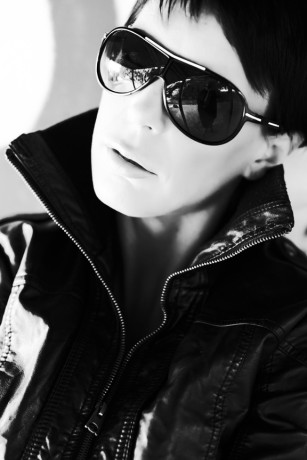

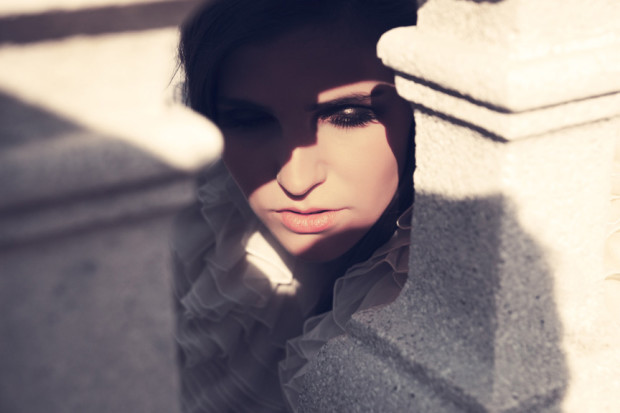
All natural light shots. Always remember that shadows are the soul of a shot. They create dimensionality and could be labeled as “the photographers best friend (if understood).”

- the power of the shot
Some people call it storytelling, some call it the WOW factor… In essence it doesn’t matter as long as you know what I mean, and that is making a shot that make people look again and again, or in short how to go from okay to WOW.
I have to be honest… For years I’ve been trying to describe this process and I simply can’t, so I just ended up calling it the “X-factor.” Yeah, pretty lame right? But it’s true.
And sometimes it’s just an expression like this shot. We took this on the boat to England for our UK tour. It’s just available light with the boat in the background, but the model’s expression does it for me.

But often it’s also the styling, the angle and the expression/pose of the model like in this pure natural light shot.
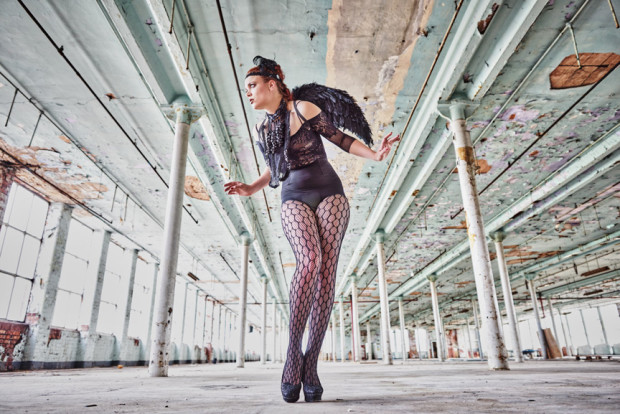
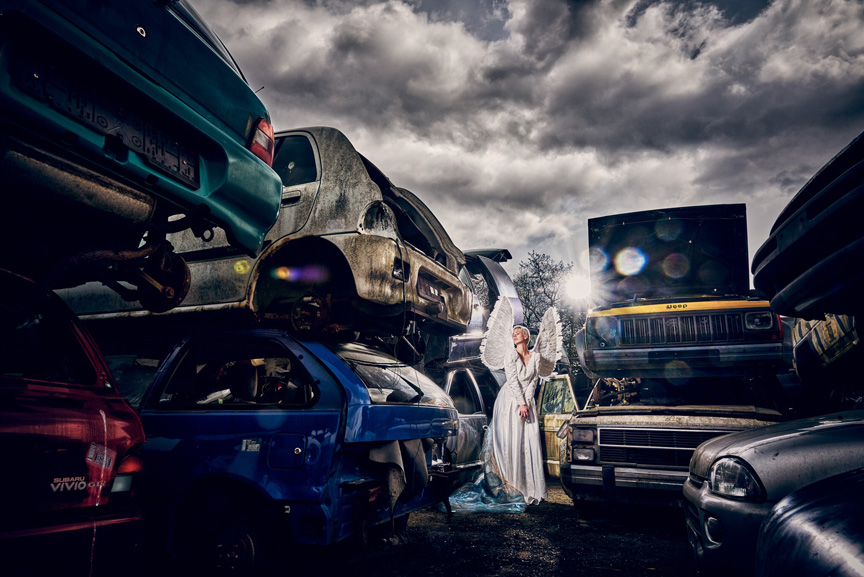
In fact one can shoot a model in great styling in front of a cathedral with awesome lighting, but it can still be very boring. However…. Choose a lower angle, include the sun in the picture and make the model pose a bit more powerfully, and voila! We go from, “Nice model and nice location,” to, “WOW what an awesome shot!”
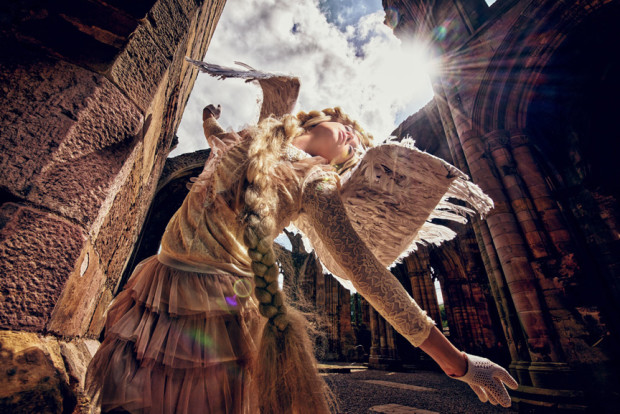
Without a doubt, one can learn and master lighting, but that “X-Factor,” that’s a bit trickier. I always tell people to look at photography they love and analyze WHY they love it. When you really dig deep into your psyche, it’s almost never JUST the lighting. It’s always something more… Styling, mood, expression, it’s “always” the whole feel of the picture. And now we are actually back at square one.
When you look at those old photographs you hardly see any spectacular strobe work, for the simple reason that there were no spectacular strobes back then, what you do see is a capture of someone’s character, of the perfect pose, clothing in combination with for example an animal (think about Avedon’s model with an elephant), or just a street scene that really captures your imagination.
We as fashion/people photographers are often relying way too much on our gear, as long as we use loads of strobes (10 preferred) and throw the model in front of the most awesome location with extreme clothing… it will work… However we often forget the most important thing about photography….
We Tell Stories With Light
So don’t forget the story, but most of all…. Master your lighting and with todays tools like KelbyOne and the internet in general there are many places to learn. Don’t skip to the heavy stuff however, but start with controlling your camera and a simple light bulb and build from there. Because, trust me on this one, if you understand your lighting you can really focus on the story.
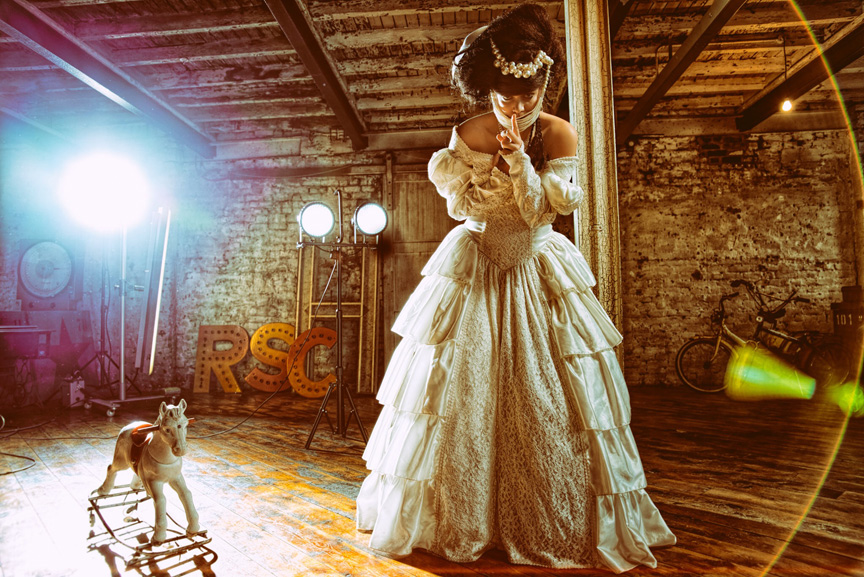


You can see more of Frank’s work and blog at FrankDoorhof.com, follow him on Facebook, Twitter, and Instagram, pick up his book Mastering The Model Shoot, and keep an eye on KelbyOne tomorrow for his brand new class Shooting Fashion On Location!